Minnesota resumes Medicare payments to most 'high-risk' providers it suspended
Published in News & Features
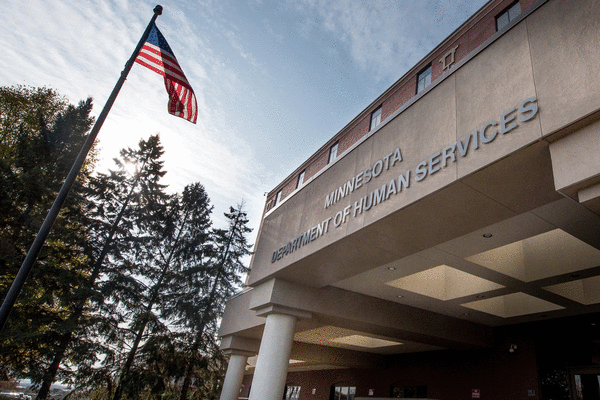
ST. PAUL, Minn. — The Minnesota Department of Human Services on Thursday said it’s restoring payments to more than 2,000 Medicaid providers after cutting off thousands of providers in programs considered high risk for fraud earlier this month.
Around 3,400 providers of services like home disability and mental health care lost access to Medicaid funding through the state after a months-long push by Human Services to verify that providers in 13 high-risk programs were legitimate operations. Most of the dis-enrollments were due to incomplete paperwork, state officials said.
The review, which happened over several months instead of the usual years-long timeframe, came amid Trump administration threats to withhold billions in Medicaid from Minnesota over allegations of widespread fraud in welfare programs in recent years.
Provider groups like the Association of Residential Resources in Minnesota called the DHS revalidation process “rushed and poorly managed,” and businesses providing services like autism care, home assistance and rides to medical appointments feared it would harm their clients.
Amid the outcry, DHS this week moved to resume payments to providers in high-risk programs who had appealed their terminations. As of Thursday, more than 2,140 suspensions had been lifted, according to the agency. Of those, 1,400 had their suspensions lifted Thursday.
“We don’t want to harm legitimate providers. We care deeply that vulnerable Minnesotans are getting the care they need from trusted providers,” department officials said in a statement. “We also have to make sure that providers are meeting legal requirements to provide services.”
High-profile fraud cases involving hundreds of millions of federal dollars stolen from state agencies have drawn national attention to Minnesota over the last year.
Minnesota fraud has been described as “industrial scale” by former Assistant U.S. Attorney Joe Thompson, who speculated total losses in Medicaid programs alone could top $9 billion since 2018 — a figure Gov. Tim Walz and state officials have disputed. So far, prosecutors have proven hundreds of millions of dollars in fraud.
In a recent report, Walz’s director of Program Integrity, Tim O’Malley, blamed fraud problems on a culture in state agencies “more based on compassion than compliance.”
As another wave of federal fraud charges came in relation to a housing service program for people with addiction and disabilities late last year, Trump administration officials threatened to withhold funding from Minnesota without “corrective action” from the state Department of Human Services.
Those threats from Centers for Medicare and Medicaid Services director Mehmet Oz are subject to ongoing administrative and legal battles, and drove the state to suspend new licenses in certain programs and hire additional staff to revalidate providers starting in January.
Vice President JD Vance and Oz had threatened to withhold billions in aid from Minnesota unless it took “corrective action” on fraud.
“Providers and people with disabilities in Minnesota are locked in and are being harmed by a political battle essentially between the federal government and the state,” said Tara Erickson, who is handling public relations for the Association of Residential Resources in Minnesota, a group that represents more than 200 providers.
Erickson said as of last week, she had heard of just seven of the home care services the association represents that made it through the revalidation process, which ended May 31. The process and aftermath have been “utter chaos,” she said.
The main reason Human Services dropped providers was for incomplete paperwork and documentation. Although 916 failed verification during in-person site visits, and four failed a background check. Fifty-nine were referred to the agency’s internal watchdog office for further review.
DHS said providers had to reestablish basic information about themselves like documentation of ownership, licenses, proof of insurance and adequate staffing. Disenrolled businesses often failed to report changes in ownership or licensing.
Providers have 60 days to appeal decisions. Minnesota Home Care Association Executive Director Joy DesMarais-Lanz last week said what essentially amounted to a “mass disenrollment” could give the public the wrong impression that most providers were not operating legitimately.
The process involved a significant expansion of announced on-site visits. Human Services recruited 168 current state employees to help with its efforts. Before the push, there were “a half dozen staff members” dedicated to site visits for revalidation.
©2026 MediaNews Group, Inc. Visit at twincities.com. Distributed by Tribune Content Agency, LLC.






Comments