Missing contacts obscure Congo Ebola outbreak's true extent
Published in News & Features
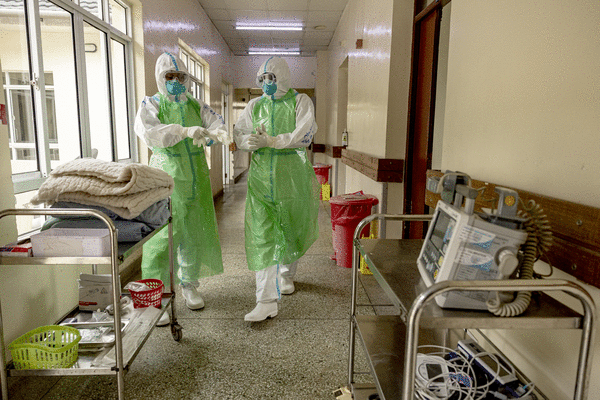
Authorities are unable to determine the true extent of the Ebola outbreak in the Democratic Republic of Congo because emergency workers can’t find all the missing contacts of patients infected by the virus, Africa’s top health official said.
Congo reported 676 confirmed cases and 136 deaths as of June 10, the National Institute of Public Health said. The outbreak has spread into three additional health zones pushing the total number of affected regions to 29 from 26, the institute said in the report on Thursday.
Health authorities are struggling with patients fleeing from hospitals in a region that’s beset with insurgency and poor transportation networks. They have also had to deal with shortage of funds, personnel, equipment and even space for burying the dead.
“We cannot say that we know the magnitude of this outbreak,” Jean Kaseya, director general of the Africa Centres for Disease Control and Prevention said in an interview. “To stop the outbreak, we need to have control on the contact list. It means we need to have access to everyone.”
Health workers have managed to only reach about 6,000 contacts when they should have tapped 20,000 people, according to Kaseya.
In Ituri, the epicenter of the current outbreak, health and aid workers attempting to carry out burials of Ebola patients are facing significant shortages.
In the 15 health zones assessed in Ituri, there were only seven teams for safe and dignified burials, far short of the 49 needed. There are also only seven vehicles available, while 98 are required, according to the Africa CDC.
There’s a 60% shortage of personnel, Kaseya said.
Then there’s mistrust in the community, he said. Residents of the area are skeptical about the unavailability of a vaccine for the Bundibugyo strain.
“Are you sure that we don’t have vaccine available,” for the Bundibugyo strain almost two decades after it was discovered?, Kaseya said he was asked during a visit to the area. Residents also think the “disease isn’t real,” he said.
At least 30 people with suspected or confirmed infections have escaped Ebola treatment or isolation facilities since June 4, according to government reports. In the 24 hours to June 10, three patients in Ituri province fled, the institute said in its latest report.
“A growing number of confirmed cases is being observed from one week to the next, reflecting continued transmission of the disease within the community,” according to the report. “A rapid geographic expansion of the outbreak is feared if public health measures are not implemented quickly.”
Sign up here for the daily Next Africa newsletter and subscribe to the Next Africa podcast on Apple, Spotify or anywhere you listen.
—With assistance from Michael J. Kavanagh.
©2026 Bloomberg L.P. Visit bloomberg.com. Distributed by Tribune Content Agency, LLC.






Comments