Inside Edgar Allan Poe's dedication to our darkest secrets and fears
Published in Books News
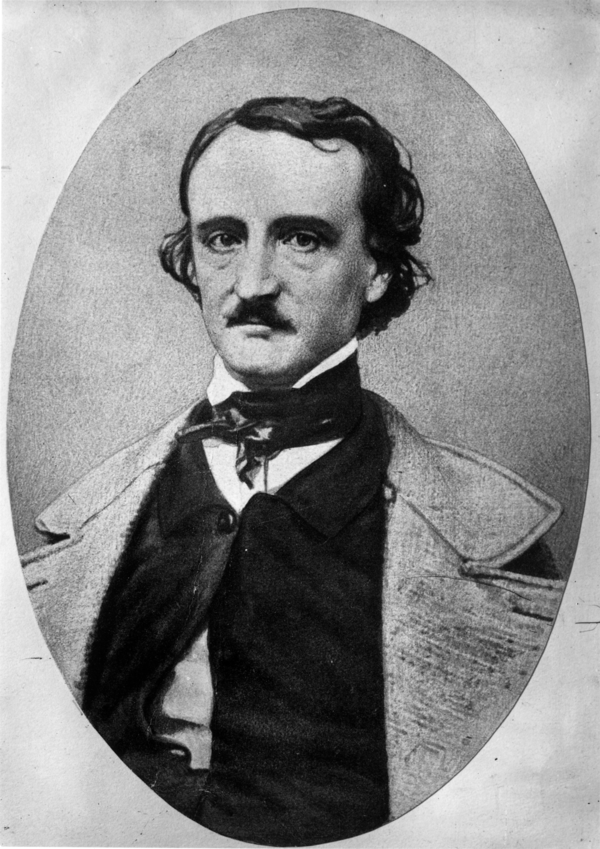
A 2026 Guggenheim Fellow, essayist, and scholar Emily Ogden is the author of the essay collections “On Not Knowing” and the just-published “Darkness Becomes Bright: On the Brief Life and Immortal Art of Edgar Allan Poe.”
She responded to our questions about the new book.
Q: Please tell readers about your new work of nonfiction, “Darkness Becomes Bright: On the Brief Life and Immortal Art of Edgar Allan Poe.” A: “Darkness Becomes Bright” is a biography of Poe that interweaves his story with the lives of important readers, in particular his French translator, the poet Charles Baudelaire; his Spanish translator, the fiction writer Julio Cortázar; and his biographer, the psychoanalyst and great-grandniece of Napoleon, Marie Bonaparte. I think of the book as a group biography of one man. A writer’s life isn’t only the span of his years on earth, I think — it’s also the life he lives in other people, the readers and writers who are changed by him.
Q: Why do you think Edgar Allan Poe has remained in the public consciousness for so long, often as a kitschy Goth icon as much as a writer, considering his literary executor loathed him? A: I think that Poe speaks to the world of our dreams — to childhood fears, to nightmares, to the most primal anxieties about being abandoned or annihilated or utterly misunderstood. His work invites a powerful kind of identification. That might be counterintuitive — vanishingly few of us have killed someone and then buried them under the floorboards, after all. But Poe’s stories are not just about crime. They are about existential predicaments that we all face: being helpless (as children); being mortal (throughout our lives); being guilty and doing wrong. Poe’s stories keep us company when these difficult realities obtrude on our consciousness, becoming impossible to dismiss.
Q: You write that you didn’t like Poe’s work initially. Can you describe how your views, much like Walt Whitman’s, changed over time?
A: Whitman once said that he didn’t like Poe’s work at first — too many “dark nights, horrors, spectralities,” he said — and I felt much the same. I thought Poe was a sensationalist, too ready to go for the cheapest thrills. But as I read him, I came to realize that there was much more to his work. In his stories, Poe dedicated himself to writing about the dark side of human experience — our most primal fears and most unspeakable secrets. I came to feel that we owe a debt to writers who are willing to represent this part of human life in their work. It’s very easy to turn away from them; to say these writers are madmen and perverts and we want nothing to do with them. But writers like Poe are the ones we need when we, ourselves, feel cast out and nearly inhuman. I wanted to write in a way that would help keep his legacy alive.
Q: Can you share a bit about Poe’s work in translation, which you write about in the book?
A: The poet Charles Baudelaire translated Poe’s work into French in the middle of the nineteenth century, just as Poe’s own life was coming to an end. It was a labor of love on Baudelaire’s part — he felt Poe had managed to articulate things he couldn’t quite find a way to say — and it was also one of the most consequential acts of translation in literary history. The French symbolists and surrealists read Poe in Baudelaire’s translation; then, twentieth-century Latin American writers also came to Poe in part because of Baudelaire. Had Baudelaire not translated Poe when he did, modernism, surrealism, and magical realism — twentieth-century fiction itself — would not have been the same.
Q. In your opinion, are mystery fans aware of Poe’s influence on the detective novel?
A: Poe fans know their author very, very well, and I think they give him full credit for originating this genre. For example, the Mystery Writers of America have named their annual prizes after him, the Edgar Awards.
Q: You write vividly about Poe’s visit to his friend Sartain and his final days in Baltimore. How do you make sense of his last days?
A: I don’t want to spoil this mystery for readers, but I will say that Poe seems to have been prone to losing his mental balance while traveling. He’d wind up wandering around alone, perhaps drinking, often troubled in his mind. The marvel is how many times friends helped him out of this predicament throughout his life. But eventually, there came a day when no one found him in time.
Q: What’s a question you wish someone would ask you about this book?
A: I include certain stories from my own life in the book, and I’d like to be asked why — and also, why those stories in particular. The stories I include are ordinary, in a way, but also somewhat eerie: deaths of pets, separations from children, near-fatal experiences, unsettling dreams.
The point I’m trying to make with these stories is that horror is much closer to us, much more ordinary, than we like to admit. Death is always there, ready to slip in through a crack or become suddenly obtrusive as the world takes a quarter-turn from the normal. I think Poe felt the undercurrent of horror in the ordinary all the time, whereas the rest of us tend to notice it only intermittently.
And I think his fans appreciate him for this: that whenever they become unsettled, they can turn to him, and find that he’s already been there. Julio Cortázar, the great Argentinian fiction writer and Poe’s translator into Spanish, called Poe our “night watchman” for this reason.
Q: Is there a book you always recommend to other readers (Poe-related or something else)?
A: I often recommend Poe’s story “The Man of the Crowd,” which was Baudelaire’s favorite but is less read than some of the others. I also recommend Fleur Jaeggy’s “These Possible Lives” — three short, stylish, and eerily philosophical biographical essays about John Keats, Thomas de Quincey, and Marcel Schwob.
Q: What’s something – a fact, a bit of dialogue or something else – from your research that has stayed with you?
A: Cortázar, whom I mentioned before, wrote an ode to Poe when he was 12 years old, whose rhyme scheme is based on “The Raven.” Later, in his 30s, he’d translate all of Poe’s fiction into Spanish.
Q: What’s something about your book that no one knows?
A: Its most important influences, other than Poe himself, are two strange and stylish collections of life stories. One is fictional: the French symbolist writer Marcel Schwob’s “Imaginary Lives.” The other, Fleur Jaeggy’s “These Possible Lives,” is basically nonfictional — though Jaeggy may take some poetic license from time to time. One of the three essays in her book happens to be a biography of Schwob, and Schwob, in turn, was inspired by Poe’s work.
Q: If you could ask your readers, or your book’s subject, a question, what would it be?
A: I’d ask Poe which of his stories were inspired by dreams. He said once that his story “Ligeia” came from a dream, but I suspect that others did, too.
©2026 MediaNews Group, Inc. Visit ocregister.com. Distributed by Tribune Content Agency, LLC.





Comments