Abby McCloskey: Social media age bans aren't perfect. So what?
Published in Op Eds
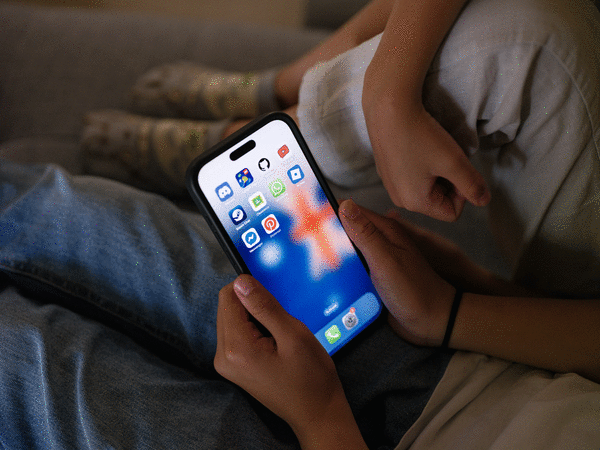
A new study finds that Australia’s ban on social media accounts for kids under 16 has not curbed use among teens. The findings come as other nations are exploring age-based bans of their own. Has the social media train left the station, leaving parents and policymakers without a way to protect their kids from Big Tech’s addictive embrace?
As a mom, my take is that even if age limits are less effective than previously believed, it’s still worth having them.
Social media has already rewired childhood. According to the American Psychological Association, teens are spending more than five hours a day on social platforms. Teens with the highest use tend to rate their mental health as poor or very poor.
Some have questioned if this is correlation or causation. But there has been a noticeable devolution in teens’ mental health coinciding with the introduction of smartphones and rise of social apps. Which is why, in 2023, U.S. Surgeon General Vivek Murthy issued a public health advisory about the dangers of social media for kids and later called for a warning label to be put on accounts for adolescent users.
More than a dozen states have proposed or implemented some type of age-based social media limit, although some have faced First Amendment challenges. And there’s been longstanding bipartisan legislation in Congress to limit kids’ social media exposure — versions of which were recently passed in an omnibus package by the House of Representatives.
But Australia was the first country to implement a nationwide social media age ban. Australia’s Social Media Minimum Age Act of 2024 aimed to prevent users under 16 from accessing social media. It required platforms like TikTok, X, Facebook, Instagram, YouTube and Snapchat to verify the ages of their users or else face fines.
Other countries, including France, Spain and now the UK have since followed suit. Effective starting in 2027, the UK’s proposed ban would block under-16s from accessing social media accounts — but also from accessing certain social features on other sites, like communicating with strangers on Roblox.
For concerned parents and policymakers, all of this seems like forward momentum. Except that age bans might not work, according to the new study from Australia’s University of Newcastle.
The researchers found that more than 85% of teens ages 12–17 continued to use restricted social media platforms in Australia after the law went into effect. A majority continued to access platforms through their own accounts. This, even though two-thirds encountered a form of age verification, including a self-declared age or uploading a selfie.
The study also did not find any reduction in daily use or time spent on social media. The only thing that seemed to really change was circumvention behavior, such as using a fake account, private browser or someone else’s account.
In response, Australian policymakers announced this summer that they would draft legislation to double the fines for social media companies to $99 million in Australian dollars. Fining social media companies for age-related violations is the enforcement of choice for the UK, too. But it’s not clear whether this works. (Cynics will note that not a single social media company has been fined even at the current, lower level in Australia. And goodness knows, the tech companies have billions that could be mobilized for lobbying against any potential charges.)
Underneath this is a deeper question: Even if a more effective social media age ban were in place, with higher fines and fewer workarounds, would anything actually change?
I will tell you personally, as a mom of three young kids — the oldest of whom is 11 — that it makes me want to throw up my hands. That fighting “the Machine,” as writer Paul Kingsnorth likes to call it, is a fool’s errand — akin to pressing for horses and buggies instead of cars. That reducing social media use will take a deeper cultural shift and individual choices made family by family before there’s a blanket political solution.
But I do think that the age bans for social media draw a clear line in the sand. And for that reason alone, they are worth continuing to pursue, around the world and in the U.S. Age limits can help the parent on the fence decide where to set limits for their child.
It is the equivalent of the age limit on the beer that some parents still buy for their kids’ parties and some college students still get with a fake ID. A warning label saying: This is ill-advised. We know that there are ways to get around these laws, too. But that doesn’t eliminate the case for age limits on alcohol. Evidence shows that over time, such age limits have reduced underage drinking, resulting in fewer teen traffic fatalities and possibly even reducing binge drinking late into adulthood.
So by all means, keep studying social media age limits and make improvements to the policies. But don’t let this early, discouraging evidence become an exit ramp for saying something that needs to be said. It’s not good — on a personal or societal level — to let children run free on social media.
____
This column reflects the personal views of the author and does not necessarily reflect the opinion of the editorial board or Bloomberg LP and its owners.
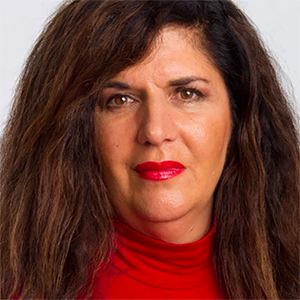
Abby McCloskey is a columnist, podcast host, and consultant. She directed domestic policy on two presidential campaigns and was director of economic policy at the American Enterprise Institute.
_____
©2026 Bloomberg L.P. Visit bloomberg.com/opinion. Distributed by Tribune Content Agency, LLC.










































Comments