Where will money for the ‘Anti-Weaponization Fund’ come from? This man has been warning of Judgment Fund abuse for years
Published in Political News



The creation of an “Anti-Weaponization Fund” at the Department of Justice may have shocked a lot of people, but not Paul Figley, a legal scholar and former DOJ staffer who has spent years warning that taxpayer money could be used by an administration for political ends in just this way.
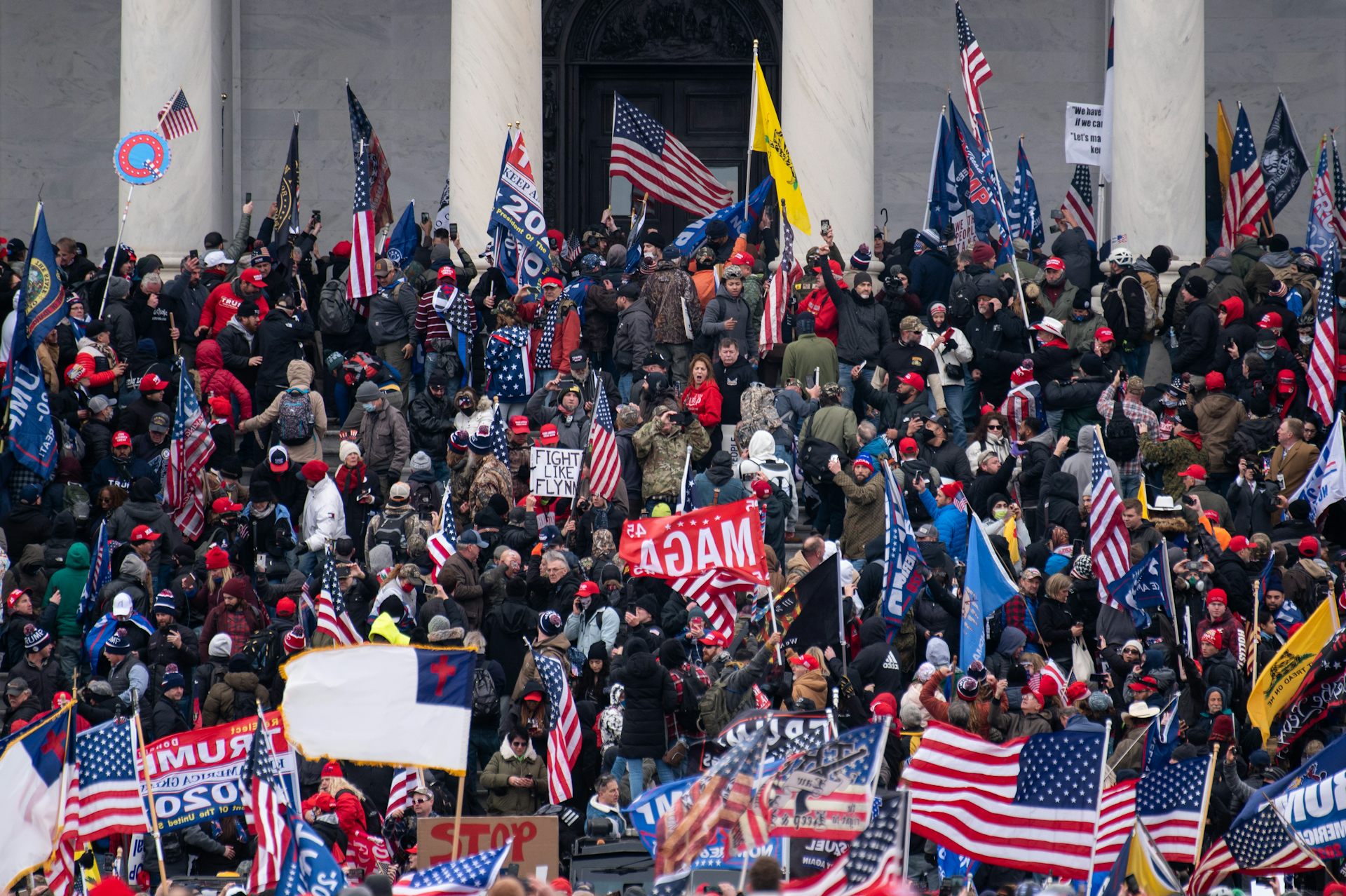
The fund, the result of a settlement of legal claims by Donald Trump and his family against the IRS, aims to compensate those who “suffered weaponization and lawfare” at the hands of the federal government. It has already been called a “slush fund” by the New York Times editorial board, which noted – as many have – that it’s likely to pay much of its US$1.8 billion funding to Trump allies who rioted at the U.S. Capitol on Jan. 6, 2021.
The money comes from what’s called the Judgment Fund, set up in the Department of Treasury by Congress in the 1950s to pay legal judgments and settlements involving the federal government. In doing so, Congress gave away a portion of its foundational, constitutional role: The power to control government spending. Figley, who worked at the Department of Justice and is also an emeritus professor of legal rhetoric at American University Washington College of Law, has warned Congress and others that by putting decisions about such huge payouts in the hands of the executive branch, the fund would inevitably be hijacked for political purposes. Naomi Schalit, The Conversation’s politics and legal affairs editor, spoke with Figley.
What is the Judgment Fund, and why was it created?
The Judgment Fund is a permanent, indefinite appropriation that Congress established to pay most judgments and settlements against the federal government. Prior to 1956, whenever a judgment or settlement was agreed upon or finalized, Congress would have to appropriate money to pay it. That meant the administration and Congress would have to go through kind of a karaoke: “Here’s a new settlement, here’s why it should be approved.” “OK, we approve it.” And it took up a lot of time and didn’t produce much good effect.
So the old General Accounting Office recommended that Congress set up a system that would pay some claims automatically, and in 1956, Congress established the Judgment Fund. It allows payment of settlements and judgments if those payments were final and not authorized or provided for by some other legally available appropriation.
Congress essentially handed over responsibility for paying for settlements and judgments, which was taking up a lot of time, to the executive branch?
Yes, the Department of Justice would do the paperwork and say this is final, or this is an appropriate settlement, send that to Treasury, Treasury then certifies that it was properly documented, and then orders the payment.
From the constitutional perspective, it appears that Congress was getting rid of an annoying thing that it had to do, but wasn’t it also giving away its power of the purse?
Yes, but only in a limited way to begin with. When the Judgment Fund was first established, any settlement or judgment that could go through the process had to be less than US$100,000. That worked so well that Congress increased the amount a couple of times, and then ultimately in 1977 said there’s no cap. It’s a permanent indefinite appropriation, and once it was established, nobody ever has to go back to Congress to ask that it be updated or refilled. It works automatically.
You’ve written and given testimony about concerns you have with the Judgment Fund, over quite a few years and spanning several administrations. What are those concerns?
The concern is that under our system, Congress should be responsible for – and is responsible for – appropriating money.
Are you worried that this fund can be abused?
It has been. For many, many years, it wasn’t abused very often. Occasionally, it was used for political purposes in the foreign policy context. President George H. W. Bush used it in 1991 to settle a claim with Iran for arms that had not been delivered. The Clinton administration used it to settle a similar claim with Pakistan in 1998. The Obama administration secretly paid Iran $1.7 billion for arms that the U.S. had not delivered, and $1.3 billion of that came from the Judgment Fund. Those all had a political context, and while they were arguably good decisions, they were decisions that, absent the Judgment Fund, would have had to go through Congress and have money appropriated after, perhaps, debate and discussion.
The Obama administration also went much further in litigation involving claims of civil rights violations by the Department of Agriculture.
The Obama administration’s use of the Judgment Fund in class action suits for discrimination in Department of Agriculture civil loan programs struck me as really bad policy. After class action suits by Hispanic and female farmers had largely failed, the Obama administration announced that it had created a new program, the Hispanic or Female Farmers and Ranchers Claims Process. This new program was funded with $1.3 billion from the Judgment Fund and open to people who had not been involved in the litigation. It was unilaterally created without congressional input or an appropriation. It wasn’t illegal, but it was using the Judgment Fund in a way that Congress had certainly never anticipated.
When that happened, my antenna went up, because for many years I was at the Department of Justice defending cases involving the Judgment Fund in cases alleging wrongful acts or omissions by federal employees. I defended suits brought against the government for auto accidents, medical malpractice, flood cases, wild animals, a wide range of things. Seeing the potential for abuse, I started suggesting that Congress amend the Judgment Fund to cap any settlement at $500 million. Above that cap, you’d have to go to Congress.
That hasn’t happened.
What did you think when you first heard about the establishment of this $1.776 billion pot, using the Judgment Fund, to compensate the so-called victims of lawfare?
I was surprised. I always expected someone would do this kind of a thing again, but I had not foreseen this one coming. And then I thought I was right: We should have amended the Judgment Fund.
The Obama administration had manipulated the fund to create the Women and Hispanic Farmers and Ranchers Claims Process without congressional input or approval. Having seen that blueprint, the Trump administration has similarly manipulated the fund to create the Anti-Weaponization Fund without congressional input or approval.
In each case, the administration believes that the people that are being compensated are worthy and should get compensation, even though they would have a lot more difficulty getting it without the creation of such a thing.
Now that it’s been used twice, unless Congress steps in, I have no doubt this scheme will be used again by another administration. It’s bad government; it’s not how our system was set up. Congress has the power of the purse. Congress, rather than the executive, has the authority to create and fund programs. The executive branch should not have it own source of funds. The Judgment Fund should not be used as an executive branch piggy bank.
Has it occurred to you to say I told you so?
Yes. I called my daughter – she appreciates certain gallows humor – and I told her that just what I’d predicted had happened. She said, “Well, aren’t you happy about that?” and I said, “Well, I’m not happy that it happened, but I’m happy that I saw it and have been out preaching about it – with remarkable lack of success.”
This article is republished from The Conversation, a nonprofit, independent news organization bringing you facts and trustworthy analysis to help you make sense of our complex world. It was written by: Paul Figley, American University
Read more:
When a president settles his own lawsuit to create a fund for allies, fundamental questions about justice arise
Cultivating obedience: Using the Justice Department to attack former officials consolidates power and deters dissent
Pam Bondi’s extreme political loyalty to Trump wasn’t enough to save her job
Paul Figley does not work for, consult, own shares in or receive funding from any company or organization that would benefit from this article, and has disclosed no relevant affiliations beyond their academic appointment.



















































Comments