The saga of Tardar Sauce, The Grumpy Cat
Published in Cats & Dogs News
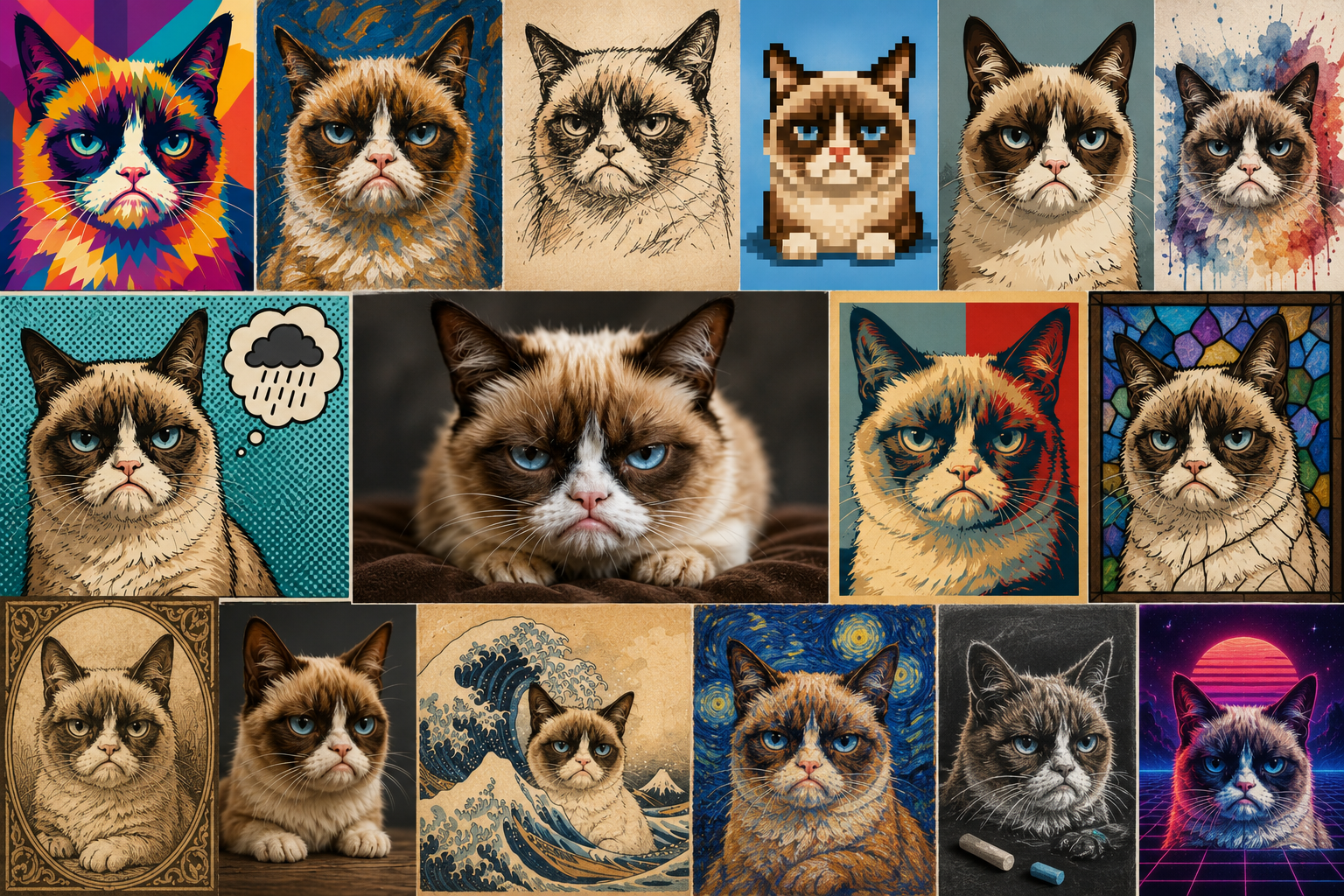
Grumpy Cat never set out to become famous. She did not perform tricks, star in an animated series, or chase laser pointers with unusual enthusiasm. She simply looked as though she had grown tired of everyone’s nonsense and was prepared to say so without moving a muscle.
That expression — a permanent scowl combined with a tiny body and an unexpectedly gentle personality — transformed a rescued house cat from Arizona into one of the most recognizable animals in internet history. For a generation raised on memes, Grumpy Cat became more than a pet. She became a universal reaction image.
Born with a Frown
Grumpy Cat was born on April 4, 2012, in Morristown, Arizona. Her real name was Tardar Sauce, a playful misspelling inspired by her distinctive coloring, which resembled tartar sauce.
She belonged to Tabatha Bundesen and her family. Although millions of people assumed her expression reflected a sour temperament, Grumpy Cat was reportedly calm, affectionate and surprisingly easygoing.
Her famous appearance was caused by feline dwarfism and an underbite, conditions that gave her a small stature and permanently downturned mouth. The result was a face that appeared deeply unimpressed with the world.
To her owners, she was simply a beloved pet with an unusual look. To the internet, she was destiny.
The Photo That Changed Everything
In September 2012, Tabatha’s brother Bryan Bundesen posted a photo of Grumpy Cat on the social news site Reddit.
At first, many users assumed the image had been digitally altered. Her expression seemed too perfect to be real. To settle the matter, the family uploaded videos showing Grumpy Cat walking, blinking and continuing to look as though she disapproved of all human activity.
The response was immediate and overwhelming.
Within days, the image had spread across social media. People began adding captions to her photos, pairing her unmistakable face with cynical one-liners and deadpan observations.
Unlike many early internet sensations, Grumpy Cat’s appeal was nearly universal. Anyone who had ever endured a Monday morning, a long meeting or a minor inconvenience recognized something of themselves in her expression.
The Rise of a Meme Icon
The early 2010s were a golden age of image macros and shareable humor. Grumpy Cat arrived at precisely the right moment.
Her face became a template for jokes about disappointment, exhaustion and mild contempt. Typical captions included lines such as, “I had fun once. It was awful.”
The humor worked because the image itself did most of the job. The captions were almost secondary. One glance at Grumpy Cat conveyed an entire worldview.
She was not angry in a dramatic sense. She was weary. Skeptical. Entirely unconvinced that things would improve.
In other words, she was relatable.
From Living Room to Red Carpet
Grumpy Cat’s popularity quickly expanded beyond the internet.
She appeared on television programs, visited major media outlets and drew enormous crowds at conventions and public appearances. Fans waited in long lines for the opportunity to meet the cat whose expression had perfectly captured their mood.
Her likeness appeared on calendars, books, T-shirts, coffee mugs and plush toys. She inspired a feature film, “Grumpy Cat’s Worst Christmas Ever,” in which she was voiced by actor Aubrey Plaza, whose dry comedic style proved an ideal match.
The cat who once lounged quietly in an Arizona home had become an international celebrity.
A Serious Business
Behind the jokes was a carefully managed brand.
The Bundesen family worked to protect Grumpy Cat’s image and licensing rights. The business generated millions of dollars and demonstrated that internet fame, when handled thoughtfully, could evolve into a sustainable enterprise.
One widely reported legal dispute involved a coffee company that exceeded the terms of a licensing agreement. Grumpy Cat Limited successfully pursued the case and won damages, reinforcing that even a cat with a famously negative expression could wield significant commercial power.
Yet the family consistently emphasized that Grumpy Cat’s welfare came first.
The Cat Behind the Meme
Those who met Grumpy Cat often remarked on how different she was from her public persona.
Rather than aloof or irritable, she was known as quiet and sweet. Her expression never changed much, but her demeanor was gentle.
This contrast only deepened her appeal. The world projected sarcasm onto a cat who, by all accounts, was perfectly content to be petted and carried.
Her face suggested existential despair. Her actual life was one of naps, treats and affectionate handling.
It was perhaps the most successful case of mistaken identity in modern pop culture.
A Farewell Felt Around the Internet
Grumpy Cat died on May 14, 2019, at the age of 7, after complications from a urinary tract infection.
The announcement prompted an extraordinary outpouring of tributes from fans, celebrities and news organizations around the world.
For many people, the response was surprisingly emotional. Grumpy Cat had been a constant presence during the formative years of social media, offering a kind of visual shorthand for collective exasperation.
She had made millions laugh without ever changing her expression.
Why Grumpy Cat Endures
Internet culture moves quickly. Memes flare brightly and vanish. Yet Grumpy Cat remains instantly recognizable years after her death.
Part of her lasting power lies in her simplicity. Her image required no explanation. The joke was self-evident.
But there was also something oddly comforting about her.
In a world that often demands relentless positivity, Grumpy Cat gave people permission to acknowledge that sometimes life is annoying, absurd or exhausting. She did so with impeccable timing and a face that looked as though she had already heard your argument and found it lacking.
That expression became a cultural artifact, as emblematic of the early social media era as LOLcats or viral videos.
Grumpy Cat did not smile for the cameras. She did not need to.
She merely stared into the middle distance, looking mildly offended by the entire enterprise, and in doing so became one of the most beloved animals of the digital age.
========
Leland P. Whitmore is a freelance writer and longtime observer of internet culture, animal history and the strange ways ordinary pets become global icons. This article was written, in part, utilizing AI tools.







Comments