Could Minnesota hunters shoot 200,000 deer this year?
Published in Outdoors
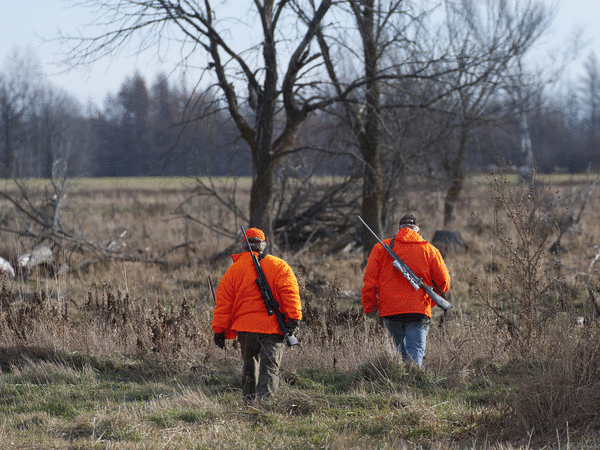
MINNEAPOLIS — Nearly a decade after Minnesota set a goal for hunters to kill 200,000 deer in a season, it might happen.
With this year’s hunter harvest outpacing that of recent years, and with generally liberal hunting limits for the main firearms season in two weeks, the numbers are on track to break the 200k barrier for the first time since 2010.
“I’m being optimistic,” Paul Burr, deer coordinator for the Department of Natural Rescources, said in a recent phone interview. “I think we’re going to reach that and surpass it.”
Burr cautioned that the weather on opening weekend Nov. 7 and 8 can be a major factor in the annual total.
Following MEA weekend, which featured the four-day statewide youth and selected antlerless gun hunts, this year’s harvest was running 19% ahead of last year, when a total of 186,368 deer were registered by the end of the year.
There’s nothing inherently magical about the 200,000 number. The DNR adopted the goal as part of its deer management plan in 2018 because, wildlife officials estimated, 200,000 would signal that deer populations across the state are generally at managers’ goals. Those goals are a balance between a bounty of opportunity for hunters and the ecological and societal problems that can come from too many deer.
From 2000 to 2010, all but one year featured harvests surpassing 200,000, with the high-water mark set in 2003 with 290,525.
Officials then managed to lower the population to the point where restrictive limits were needed to regrow the herd. In 2014, a mere 139,442 deer were killed by hunters, many of whom grew frustrated by the whiplash.
Podcast revisits deer hunting murders
It was 22 years ago next month that America’s most infamous hunting-related murders were committed in the Wisconsin woods, and a national podcast is revisiting the crime.
“The Reckoning of Chai Vang” is the title of the latest episode of “Blood Trails,” a hunting true-crime podcast produced by MeatEater, the outdoors company founded by hunting personality and conservationist Steve Rinella.
On opening weekend of Wisconsin’s 2004 gun hunting season, Chai Soua Vang of St. Paul shot and killed six people and wounded two others after they confronted him for trespassing in Sawyer County in northwest Wisconsin.
The crime, which has been the subject of a book and a documentary, was on the radar of “Blood Trials” host Jordan Sillars from the podcast’s inception, but it took until its third season for the story to come together.
“Because it’s so famous, I wanted to go over everything I could to cover it in a well-rounded and complete way,” Sillars said in a phone interview. “Getting the access I needed, it just took quite a while.”
While many of the victims’ families declined to speak, Adam Laski, who was 16 at the time and at the hunting camp, agreed to participate. Vang killed Laski’s father Allan.
Also featured in the episode is Yia Vang, the Twin Cities chef and hunter who was in college at the time. Yia Vang (no relation to Chai Vang) offers the perspective of Hmong hunters, who faced increased scrutiny and occasional hostility from some white hunters in the aftermath.
Chai Vang, who was convicted and sentenced to six consecutive life sentences, died in prison in June.
The episode isn’t the only attention the local hunting world is getting from the national brand. “Blood Trails”’ first episode examines the 1986 disappearance of 17-year-old Noel Dalluge of North St. Paul while hunting in Aitkin County. And the MeatEater podcast will tape an episode Dec.18 at the Pantages Theatre in Minneapolis.
Woodcock are migrating
With ruffed grouse hunters working hard for fewer birds this year, many might be consoled to know that American woodcock, often seen by grouse hunters as a consolation prize, are piled up in Minnesota and Wisconsin right now.
Or at least they were Sunday, when my son and I went out exclusively for them. For us, the diminutive “timberdoodles” are no backup bird; plucked, grilled whole and eaten caveman style, there are few better meals.
With our dog under the weather, we did our own brush-busting and flushing in a known-to-us hotspot on the outer edges of the metro — closer to home than the nearest grouse woods. (Grouse don’t fly south for the winter; woodcock do.)
We flushed 17 birds in a few hours — an exciting pace that featured three startling double-flushes. We took home two birds each, just enough for a respectable meal, though not quite a feast.
©2026 The Minnesota Star Tribune. Visit startribune.com. Distributed by Tribune Content Agency, LLC





Comments